Primitive
Composes accessible, utility-first components you can restyle endlessly.
- Version
- v1.0.0 · Updated Jul 18, 2026
- Context
- ≈1,746 tokens
- Security
- ✓ scanned
- License
- Single seat
- Works with
- Claude Code, Cursor, Codex
Checkout opens soon · launches at $9
≈1,746 tokens · v1.0.0
Live demo — an original page built in the Primitive style. Open in new tab
About this skill
A highly customizable, accessible, and modern design system built on utility-first principles and clean components. Its live demo renders a developer docs page — code blocks, parameters table, API reference, and changelog.
The skill file
Primitive is a foundation, not a finish. It provides clean, composable, utility-first building blocks with sensible accessibility baked in and almost no decorative opinion — so you can layer your own brand on top without unpicking someone else's choices first. The aesthetic is a neutral grayscale with crisp geometry, designed to be re-themed in a single place via tokens. Reach for it when you're building a design system from scratch, shipping internal tooling, or want maximum control with minimum fight.
Design principles
- Unopinionated by default. Visual styling is minimal so it never gets in the way of your brand.
- Composable over monolithic. Every element is a small, predictable building block you can combine freely.
- Accessibility is not optional. Semantic HTML, ARIA, focus management, and keyboard support ship by default.
- Token-driven theming. Every color, radius, and spacing value is a CSS variable — change once, apply everywhere.
- Utility-first. Layout and spacing come from small composable utilities rather than bespoke component CSS.
- Predictable and boring on purpose. Consistency and clarity beat cleverness.
Color
The palette is deliberately neutral so it disappears under your own theme. The background is pure white #FFFFFF with a faint #FAFAFA surface for raised areas. The primary color is near-black #171717 (used for primary buttons and emphasis), with #525252 as a secondary. The five swatches form a clean grayscale ramp — #171717, #404040, #737373, #A3A3A3, #E5E5E5 — that maps cleanly to text, icons, dividers, and disabled states. Foreground text is #0A0A0A, muted text #737373, and borders #E5E5E5.
Light-mode token reference:
- Background
#FFFFFF, Surface#FAFAFA, raised surface#FFFFFF. - Primary
#171717, Primary hover#000000, Secondary#525252. - Neutral ramp:
#171717/#404040/#737373/#A3A3A3/#E5E5E5. - Foreground
#0A0A0A, Muted#737373, Border#E5E5E5, Focus ring#171717. - Semantic slots (override-ready): Success
#16A34A, Warning#CA8A04, Danger#DC2626, Info#2563EB.
In dark mode, invert the ramp: background #0A0A0A, surface #171717, foreground #FAFAFA, muted #A3A3A3, borders #262626, and a primary of #FAFAFA for high-contrast actions. Because the system is token-driven, swapping themes is a single variable set — and your brand accent slots in by overriding --primary.
Dark-mode token reference:
- Background
#0A0A0A, Surface#171717, Border#262626. - Primary
#FAFAFA, Secondary#A3A3A3, Foreground#FAFAFA, Muted#A3A3A3. - Semantic slots: Success
#22C55E, Warning#EAB308, Danger#EF4444, Info#3B82F6.
Every value is exposed as a CSS custom property (--background, --primary, --radius, --space-*). Re-theming is a single override layer; the components never hardcode color.
- Typography
- Layout & spacing
- Components
- Motion
- Accessibility
- Use it with your AI tool
Preview ends here
Typography, Layout & spacing, Components, Motion, Accessibility & Use it with your AI tool unlock when checkout opens. Get notified
What's inside
- SKILL.md6.9 KB
More in Design
View allEditorial Pack
Collects the editorial cluster — typography-led, content-first pages in one install.
Design Systems Pack
Bundles every aesthetic design system in one install — switch styles per project.
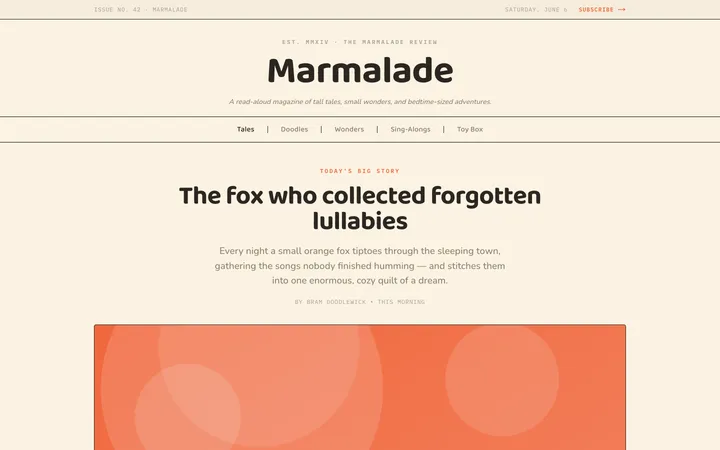
Fiction
Illustrates children's-book warmth with bold outlines and saturated color.

Arcade
Presses chunky pixel buttons and rainbow shadows into arcade-cabinet fun.
More from @staqd
View profileEditorial Pack
Collects the editorial cluster — typography-led, content-first pages in one install.
Design Systems Pack
Bundles every aesthetic design system in one install — switch styles per project.
Fiction
Illustrates children's-book warmth with bold outlines and saturated color.
Arcade
Presses chunky pixel buttons and rainbow shadows into arcade-cabinet fun.